Showing posts with label technology. Show all posts

06 July 2012

Mouse Jockey

Back from a longer absence than we care to admit, the Peanut Whistle blogger is catching up to all the new ways of doing things in radio. Back in the dark ages we had separate machines that had specialized tasks. Tape machines, record players, live sources: all compartmentalized and each one doing its job very well.

Now days computers and highly complicated software have replaced both physical machines and human beings. Don’t get me wrong, I am no Luddite. I have always embraced new technology. In fact, you could call this blogger an early adopter.

What I take issue with is that we now over rely on one central computer to deliver all our content. There is no safety net anymore. No back up. Newbies to the business are not trained on legacy equipment, so they’re lost when the software crashes. With no physical interaction with our playlists, they’re screwed if something goes wrong. A computer mouse makes a poor replacement for a cart tape machine.

To me the term disk jockey is passé. To this generation the Peanut Whistle proposes a new handle: “Mouse Jockey.” Although getting a saddle on those critters will be tough.

Stay tuned.

21 June 2011

The Hi-Fi, Final Chapter

Appraisal

The project is underway first with the rat’s nest of wiring. The half century old harness is in surprisingly good shape; all solder joints still intact. Very little rust is present. Dust and grime are abundant. Using this unit daily would be problematic, so I choose to trash this fire hazard wiring.DSC00208

When I energize the unit in 2009, the radio performs well on both AM and FM although the switching between sources is quite scratchy and inconsistent (volume, tone and selector switches need contact cleaner). The ancient tube amplifier powers the built in speakers just fine with more than acceptable fidelity. Audio out of the left side of the cabinet is distorted on bass sounds (I suspect a cracked woofer.) The left loudspeaker is water damaged beyond repair. I keep the right one for a souvenir. The automatic record changer is useless. Even when new it was not exactly state-of-the-art. By 2011, I need a new game plan as far as the electronics are concerned. I decide to purge the contents and start with an empty carcass. What is left concerns me.

Conclusion

DSC00212On close inspection the hi-fi actually looks better than it is. The unit is made with birch plywood with a rosewood veneer, mostly ½” with a few ⅛” panels. The only solid wood appears to be a long board that reinforces the back and the 4 tapered legs turned in late ‘50 modern style. The top is distressed from years of storage and abuse. The finish has long lost its sheen. A peek underneath the lid reveals what the cabinet must have been in its former glory.

The deeper I dive into the console, the more I am convinced to scrap it altogether before drowning in an unrewarding money pit. Realizing that the old GE console is more of a family relic than a truly vintage representation of hi-fi art, my mission now is to find a better example then restore it. Better yet, I will design and build my own.

Stay Tuned.

05 May 2011

The Money Room

Continuing our tour of my second radio home, let’s walk in to the adjacent “Production Room”. This is the money room. All of the commercial spots were cut here. Shoebox shaped, the area accommodated up to two announcers (WSPZ production room2 booms with Sennheiser microphones).

Effects were limited to vocal compression and tape echo. But the studio sounded superb thanks to the Urei board, Otari and Tascam tape decks. Vinyl playback was on the coveted Technics SP-15 Turntables. Most commercials were mastered on ¼” tape, then dubbed to the Audicord Cart Recorder; although, sometimes I would go live to cart. The station was all balanced professional broadcast equipment. No consumer level gear was used. (That’s me rocking the mike in 1988 from production.) I spent the majority of my work day there. More freedom and creativity spurred my affection for this place.

Despite its small size the WSPZ production room was, in a word, cool.

WSPZ Production Room

Stay tuned.

©2011 Neal Rhoden, the Peanut Whistle Weblogs. All rights Reserved.

Technorati Tags:

04 May 2011

Virtual Tour

Today is the first installment of what will become a permanent page on our companion Aircheck Blog. Since no video tour was shot of my second radio home like WBKI on YouTube was, Peanut Whistle presents a look at my control room from radio home number two in Atlanta (Douglasville, GA), WSPZ in still photo(s). The owners had just remodeled the station with new equipment. I was in Hog Heaven.

Here’s a brief list of the Goodies:

  • Urei 1683 8 Channel Stereo Console (control)
  • Urei 5 Channel Stereo Console (production room)
  • Otari MX 50-50B 2-Track Analog Tape Decks (2)
  • Tascam 122B Audio Cassette Decks (3)
  • Belar Modulation Monitor
  • Electro-Voice Sentry 100a Studio Monitors (4)
  • Technics SP-15 Turntables (4)
  • Sennheiser  MD-421 Microphones (2)
  • DBX 160x Compressor/Limiters (2)

Enjoy the tour.

SPZ Control Room Virtual Tour 1

Stay Tuned

©2011 Neal Rhoden, The Peanut Whistle Weblogs. All Rights Reserved.

Technorati Tags:

03 May 2011

Restomod

I was inspired by car restoration hobbyists for my most resent idea: “restomod.” You see, some people actually have enough cash to turn a junk yard jewel (hint: sarcasm) and transform it into a true classic. Rust buckets all over the world have be resurrected. Purists insist on ground up restorations with “numbers matching” parts. In other words, these cars are returned to factory fresh condition with original parts.

Another camp of car enthusiasts subscribe to a different philosophy—modification and restoration or restomod. Basically, they obtain a donor car (usually just a body) and build it up with modern high performance parts. The resulting car winds up resembling the original, but it drives, handles, and performs on par with modern state-of-the-art vehicles.Spotmaster Board WEAS

On to my idea. This combines two of my passions, cars and broadcast radio equipment. What if I find an old fashioned radio mixing console, gut the electronics and replace them with today’s best professional audio components. Most of those old boards were very roomy inside, like a ‘57 Chevy, and would lend themselves to extreme modifications. The exterior would be restored to original factory fresh appearance and function; the best of both worlds, classic ergonomic design with stellar 21st century sonics.  I would fill my fantasy studio with such equipment, like the console pictured above. It’s an old Broadcast Electronics Spotmaster, the one I learned on. It was maintenance deferred, sounded like crap, but was easy to “drive.”

Recently, I stumbled on a guy who has done this. Here is a link to the site for photos and more information.

Stay tuned

© 2011 Neal Rhoden. The Peanut Whistle Weblogs. All Rights Reserved.

28 April 2011

Audio Alchemy

During my first 4 years in radio I worked in a studio wired for monaural sound only. Stereo aircheck recording was not feasible with the available equipment. However, in 1985, I used a small “disco” mixer to make stereo mix tapes for personal use. Previously, I experimented with re-routing the left and right outputs of a single turntable to the two mono pre-amps then into program and audition respectively; successfully recording in stereo. This method was cumbersome because the left and right inputs were controlled by two separate knobs on the board (one routed to audition, the other to program.)Independent Stereo Recording Circuit

The studio’s Technics SP-15 turntables audio cords were re-routed from the usual phono pre-amplifiers to the small (cheap) stereo mixer. The diagram on the right is a speculative idea of what if I had used this set up to record an actual aircheck. Using this type mixer would have been real world challenging due, in part, to its inability to switch on and off monitors and microphone.

By 2009 I had the ability of digitally isolating the live vocal portions of my original aircheck recordings and carefully synchronizing in stereo music from CD’s and other digital files (mp3, wav, etc.) It was impossible to remove all unwanted mono audio. Some “phasing” between the new stereo and old mono occurred.

Alternate Signal Path Independent RecordingWith this in mind an alternate wiring path would have been preferable for future “stereo rebuilds”. The simple diagram to the left illustrates an easy method of electrically isolating the DJ microphone from the (mono) music and other prerecorded elements of my shows. The isolated vocal tracks could have been later used to assemble a true stereo mix, either analog or digital.

Stay tuned

©2011 Neal Rhoden. The Peanut Whistle Weblogs. All rights reserved.

06 October 2010

Bye Bye Bell

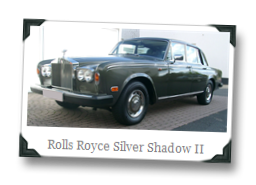
Call  me an old fogey, but I just don’t understand what is all the hubbub about phones these days? I just want to talk. I don’t need my telephone to take pictures, display email or repave the driveway. I remember a time when only private eyes, doctors and rich guys in Rolls Royce Silver Shadows had a mobile phone, now everybody has a cell (unrelated to the old fashioned mobile phone.) The first cellular phones were the size of a small suit case; thank God for miniaturization.

Although I got my first cell phone in ‘96, I’ve been resistant to getting on the “smart phone” bandwagon. And, I have refused to let go of my landline—until now.

Angie and I have agreed to drop landline service forever and go total wireless. Now you can have a home phone and a cell through Bluetooth® technology. New to me is a base unit phone that has two extensions than run via your wireless provider as long as your Bluetooth enabled phone is within range. So cutting the cord will be less painful. Now this old fogey can talk on a conventional home set (with talking caller ID, mind you) while permanently freeing myself of Ma Bell.

Stay tuned

©2010 Neal Rhoden. The Peanut Whistle. All rights reserved.

30 September 2010

Ones and Zeros

Christmas 1982 the audiophile community was all abuzz over the shiny 12 millimeter disk that would revolutionize sound forever. The CD or, as originally known  the Digital Audio Compact Disc, was billed by Sony and others as “perfect sound forever” and I had to have one. By 1983 I was in the showroom of my local high end audio shop Audio Outlet. I was 17 and newly employed so all I could afford then was only a listen. CD players cost as much as my first car and CD’s themselves were about 18 bucks so buying one was not feasible. The technology was so new that most people would have to wait at least a decade before CD’s would be common in homes and 15 years, the late 90’s, before most cars were equipped with players.

Looking back on 1983 at my first audition, I didn’t believe my ears. The sound of instruments was clear and distinct with life like separation as though the musicians were actually performing live. I forgot that I was listening to a recording and transcended to a different setting altogether. As good as that first session was, none of the music I liked was yet available on the new format so I had to continue buying vinyl for a while. As much as I wanted one I told the eager salesman that “My ears loved it but my pocketbook couldn’t take it.” It would be four more years before I got my first CD player. That was 1987 and CD’s were still about $18 a piece, worth every penny however scarce. As time progressed the hardware and software became much cheaper. For me, though, recording digitally on CD was only a pipe dream. My hobby, and by then profession, was recording. I did everything in an analog world.

The best thing about digital sound is not what it adds it is in what is missing. Freedom from noise, tape hiss, immeasurable wow and flutter, extended frequency response and wide dynamic range are all earmarks of the CD. Many sound enthusiasts claim that digital sound is harsh and bemoan the loss of what analog added to the signal. Most call this “warmth.” Modern recording engineers agree that analog is better and attempt to replicate the sound in software. I would have seen this trend as a step backward in my youth, although now I appreciate both approaches to recording sound.

Analog reminds me of how 35mm film makes an image warm and inviting while digital is akin to the look of live video, realistic and stark. Both technologies continue to coexist. Since no technology really is “perfect forever” blending both is the way to go. The best attribute of digital is its ability to archive without any loss of quality on the shelf. Analog tape, on the other hard, degrades over time. Cassette tapes, especially, lose high frequency content over time. That is why I have been transferring my analog originals to digital with a few recordings made into CD’s. Most of the transfers exist on my hard drive. I began my digital migration in 1995 with the now defunct Sony Mini Disc then to CD and finally Mp3 files. A Peanut Whistle subscriber has suggested that I transfer my dad’s old recordings to CD. Thanks, I’m way ahead of you. I’ve been doing just that for the past 15 years.

Stay tuned

©2010 Neal Rhoden. The Peanut Whistle. All rights reserved.

28 September 2010

File Under: Audio

The dictionary defines an audiophile simply as “an audio enthusiast.” A short, all too simple definition for my lifelong obsession with sound. Thanks go to my dad for getting the ball rolling on my aural hobby. As early as age three I remember his portable reel-to-reel and microphone recording me in one of his interviews with me his toddler son barely old enough to talk. Flash forward a few years later I had taken up the hobby recording sound effects—doors slamming, thunder clapping—with a stereo cassette boom box and an electret condenser microphone. Just like Daddy I had been bitten by the audio bug.

Age 17, I began and continued a career in radio only as an excuse to play with all the knobs and switches that shaped sound. It was never for the purpose of money or fame. I was also a very young and capable soundman in church often wearing my emotions on my sleeve because older folks often lacked the deep understanding of audio I possessed. In time I learned to put my hobby in perspective: got a real job, learned how to deal with ignorance, developed diplomacy and generally became less of a nerd. As the short dictionary definition proves, society as a whole cares much less than I do for audio. That’s alright we all have our interests. If only I could combine my experience and attitude now into my teen ears.

Stay tuned

©2010 Neal Rhoden. The Peanut Whistle blog. All rights reserved.

08 September 2010

Muzac of Your Life

Does anyone remember elevator music? The company most famous for providing innocuous string arrangements of popular tunes was Muzac®. These sleepy arrangements could be heard in doctors’ offices, banks, grocery stores, and of course elevators.

Today I continued my audition of several cassette tapes made by my late father. His hobby was recording reel-to-reel and cassette audio tapes of anything and everything. He captured music, conversations, sermons, airchecks, sound effects and spoken word diaries. He was blind so printed labels of the tapes were not a priority. You can imagine the challenge it has been weeding through his hundreds of tapes over the past 19 years following his passing. Just a moment ago I was listening to myself as a teen discuss training my 12 year old sister how to drive. My mother, panic stricken in the backseat threatened, “I’ll jump out, if you let her drive!” My dad loved to record us with our guard down a la Allen Funt and his Candid Camera approach to recording conversations.

Some of his tapes are a hodgepodge with no apparent theme or direction. A sermon on one side then on the next side a section of conversation, some things recorded off radio. He never left a moment blank on a tape. Usually he’d put some dreadful elevator music at the end of a side for no reason other than filling out the tape. It was not your usual Muzac® fare. No, these elevator gems were popular hymns and gospel songs he found on a long forgotten FM Christian radio station owned by Moody. They were apparently an automated not-profit broadcaster bent on putting listeners to sleep. My dad was a fiery Pentecostal preacher whose musical leanings were more upbeat; I will never understand why he listened to this station. Maybe he had found an insomnia cure.

Stay tuned

©2010 Neal Rhoden. The Peanut Whistle Blog. All rights reserved.

01 July 2010

Roughing It

Oh how spoiled we have become in this modern age! For a few days I have been borrowing high speed internet from the public library and other municipal services that provide free Wi-Fi. God forbid I have to leave the house to get my Internet fix. Right now we’re stuck with dial-up Web. That was ok 10 years ago when no one had high-speed—but, come on.

Fitting nicely in my intent to become more active—or maybe yet another hinderance—mobile Internet allows me to see the outside world while not missing my electrronic “friends.” A few months back, in the Spring, I coined a new term for myself—eBreak—which is a vacation from all electronic devices: cell phones, computers, the Internet. My eBreak was an amazing success. For an entire week I abstained from all eMails, Facebook and other electronic distractions that had begun to overwhelm me. I highly recommend an eBreak to everyone. It’s just about time for another. Incidently, for my car guy friends: I know that an e-brake is shorthand for emergency brake, but my new word is spelled b-r-e-a-k; just so you’ll know.

Stay tuned

©2010 Neal Rhoden, the Peanut Whistle. All rights reserved. 

19 April 2010

Freebies

If you are as cheap as I am then you are probably looking for good deals all the time.

To be even more similar to me you like to find free software on the Internet. Two very useful programs that I have found are 100% free to use forever, no strings attached. They are free of ads as well. I give my personal recommendation.


If you need an awesome free word processor nearly equal to Microsoft Word ® try Open Office. Download at  http://www.openoffice.org


If you like to tinker with digital audio then get the beta version of Audacity for multi-track recording and editing. I find it very reliable and easy to use, weather you're a beginner or an experienced pro. I have been using Audacity for about five years. There was a slight learning curve in the beginning. With the on-line users manual, all features are comprehensively explained. I am not a beginner; audio has been a serious hobby of mine for 30 years: in radio production for a dozen years and church sound since I was 14. Devices and fads have come and gone, but I can truly say that Audacity is the most useful tool ever. It does things impossible for even state-of-the-art analog production studios when I began in radio. The only criticism: there is no real time preview of plug-in effects. Hey, it is free after all. You may download at http://audacity.sourceforge.net


Stay tuned

©2010 The Peanut Whistle. All rights reserved.

13 January 2010

Pandora’s Box

  Many music fans with high speed Internet already know of the vast streaming audio choices the web offers. Today I am listening to Pandora radio. The service is awesome and it is free; you can tailor according to your own tastes. Type in your favorite song or artist and, voila, it chooses a mix of selections especially for you with very minimal ads. To me; as soon as most Americans have a computer, Wi-Fi or WiMax receiver or web enabled cell phone, traditional radio is dead. That may be sooner than most people think. I hardly ever listen to AM or FM for anything more than news or the occasional talk show. I suspect many others have similar listening habits. Unfortunately, the market cannot withstand the infinite choices available and needs to be sifted because no company can make money when the audiences are so diluted. When any average 16 year old can start an on-line radio station in his basement and can pull away just one listener from more traditional media who knows what kind of Pandora’s box we’ve opened.

Stay tuned

copyright 2010 the Peanut Whistle. All rights reserved

01 October 2009

Welcome to the Future

It’s funny how the idea for this post came to me right before I hear a new Country song with the exact same concept and title by Brad Paisley that has been percolating in my own brain for the past several weeks. I have had 43 wonderful years on this planet and I see the time we live in right now, technologically, is the best in history. Personally, I have carried the past around like a golden god not realizing that now is the best time to be alive. Forget recessions and floods, today is where I need to be not trapped in some nostalgia hell like an 80 year old. Yes there were good times and I will continue to recall them in posts.

We are living in a world that the Jetsons would envy. Our society has advanced in the last 25 years at a pace more rapid than the quarter century that preceded it. Compare and contrast 1960 through 1985 politically, socially, technologically, and artistically. Changes and advancements were made just not as rapidly. The focus of this blog is art and tech so I won’t stray too far. In 1985 I was still using the same stereo Lp for music that my dad used in 1960. In ‘85 the compact disc was new having been introduced to the marketplace Christmas of 1982. It was the age of Reganomics an the birth of Mtv.  I was a teenager full of wonder but never dreamed of how the future would unfold.

This present generation has all but abandoned the CD and other physical music media for downloads from Internet sources both legal and otherwise. Not to mention what all we can do with our cellular phones. This was a device that resembled a brick a generation ago. We are using our tiny cell phones now for everything; Web surfing, video, music, texting, games, the list is endless. We do everything with these devices except make a phone call, it seems.

The downside of living today is that I believe we have lost some of our humanity. We have substituted Email and social websites for actual human contact. In the process we are much more rude less evolved and dumbed downed in the absence of more “primitive” communication. Don’t get me started on the atrocious grammar and spelling I see on the Internet. When was the last time you wrote an actual letter with a pen and paper? Thought so. Well, we’re here, Welcome to the Future.
Stay tuned.

19 September 2009

wet your whistle

PW candidate 4 negative

Welcome to the newly redesigned Peanut Whistle. For those of you reading via Facebook notes thank you very much for viewing the basic text of this blog. You will enjoy the Whistle so much more by visiting the website from which this blog originates. Our address is www.thepeanutwhistle.com or click any time you see a hyperlink (usually in blue letters). One of the best features of my new site is the extra audio, video and photos I have included as support for the text. There is music and links galore, so go wild.

Your word of mouth advertising is very crucial to keeping the Peanut Whistle afloat. Also, if you see anything advertised that interests you please feel free to visit my sponsors then return by hitting the back button on your browser. Visit us often because I am constantly adding new content even to older blog posts. For instance, the Gran Torino post includes new pictures of the old wreck. Facebook only archives posts as they originally appeared.

When you are on www.thepeanutwhistle.com check out the side bars for the audio & video and click away on the numerous play buttons as you scroll down the page. There are numerous links beneath our snazzy new header. They lead to my other blog, Gospel Aircheck, my YouTube channel, and the more technical pages I have set up.

Be sure to check out our audio restoration services as well. Peanut Whistle Audio (PWA) will turn your old analog cassettes into CD’s and other digital media. Our rates are very reasonable. “We work for peanuts.” Contact us at nealrhoden@thepeanutwhistle.com

Stay tuned.

18 September 2009

Swap Shop

header candidate one

One of the joys of small and medium market radio is the contact by phone with my listeners both on the air and off. This was no more apparent that at radio home number four, WBKI, in tiny Bremen, Georgia. We had a live call in show called Swap Shop. It was tremendous fun. Callers would phone in their radio classified ads. Anything from bedding and blankets to cars, trucks and farm animals. Along the way I made some telephone friends who felt they knew me personally. I suppose I did a fairly good job of listening to them and recapping what was listed after the conversation ended.

This was all of course absolutely live, without profanity delay, to the air. I was always fearful of losing our FCC license over some nut dropping a cuss word or two. It never happened though. Whew. There is nothing like doing seat of your pants radio. Introducing records is ok, but nothing beat witnessing the unexpected, unscripted, spontaneous and organic process that was Swap Shop. I had a few regulars; Ole Waco Nut for one who lived in nearby, you guessed it, Waco, Georgia, that is. I think he made his living selling items on our show.

Then there was town gossip, Virginia, who who had all the latest news from the whacky goings on in the little town along with her plugs for fresh eggs and chickens from her farm. She visited in person on my last day at the station to wish me farewell. We had an entire hour wall to wall with callers. Quite surprising, with a 2,500 watt signal, the hour never lagged.

I had attempted at number two radio home, WSPZ, something called On Air Market a quarter hour show that seemed like an eternity. I came in around 3:45 pm for the show where no live callers were featured due to our owners’ paranoia. The savory seasoning of live conversation was missing, thus the show, like the station in general, was extremely bland. I had a producer screening and taking dictation of caller submissions who would chime in when needed, like Roz on the TV show Frazier.

Market Calls on 900 AM in Savannah was similar. As a fledgling broadcaster I feared accepting the challenge of live call-in until 1986 when I had three years DJ experience under my belt at my first radio home. Previously, I had refused hosting the show. The one time I finally did it my delivery was so impersonal and unmemorable that I overcompensated and overshadowed the callers not allowing personality to shine through. I got almost every recapped phone number wrong. Thank God it was only 30 minutes. Actually, 20 minutes of show and 10 minutes of pervasive music to fill the voids. Seven years later It prepared me for Swap Shop on WBKI in what not to do.

Stay tuned.

14 August 2009

Skate, Skate, Skate

In  May of 1984 I was wrapping up my senior year of high school having the time of my life working in radio. Spinning the gospel music in the afternoon following school gave me an easy way to earn money part time while studying for finals during songs and preaching shows. We played Lp’s and 45’s directly to air not from carts like the bigger stations did so I actually spun vinyl as the disco DJ’s did and still do.
This experience with tight cues on our Technics SP-15 turntables was a joy. Immediate starts from a dead stop were possible with those units. When I wanted even closer starts or begin within a selection I would revert to a method called a slip cue. You would allow the platter to run underneath the record while holding the vinyl manually then releasing the record when needed. Pow! you were rockin’. High torque and perfect precision from the direct drive motors provided years of trouble free service. All but one of my non Internet radio homes used this particular model. In ‘84 a couple of them would set you back the price of a good used car, worth every penny.
Anyway, my station was hosting a Christian Skating party on Monday nights and was using our morning man Dennis Allen and others as guest DJ’s. I had no concept of their compensation but I was soon to find out some very good news. Our sponsor, Savannah Skate Inn, not actually a hotel, rather a roller rink wanted an additional skate party on Saturday nights aimed at a slightly younger clientele. The rink’s manager, Tommy Edwards, apparently wanted yours truly to host. He worked out my compensation. I was to be paid three times my hourly rate at the radio station. Wow!

Six days following my high school graduation Contemporary Christian Music rocked the Skate Inn. Church youth leaders brought in bus loads for our premiere. Admission was only $3.00, a dollar less with a coupon and free skates rental. A quarter of each admission was put into jackpot that was awarded to the largest group represented. What a win win scenario!

I was a bit nervous at first facing a live audience but soon overcame the butterflies when I realized the interactions directly with patrons presenting song requests and their putting together a face with a voice. One mother had assumed my age was 35. “Thanks ma’am, I’m only 18,” was my grateful reply. I was perched in the booth among my peers spinning my own Christian Rock ‘n Roll records, playing the Hokey Pokey, couples skates, etc.

One faux pas has haunted me to this day. During one contest, all girl skate, I proclaimed to a skater taking her for a boy, “That’s all girls!”. “I am a girl,” was her curt reply. Egg all over my face, I proceeded with the segment gesturing an apology to the young lady.
Savannah Skate Inn had a nice equipment setup: Two direct drive turntables; not the reference standard Technics SL-1200 found in discos and rinks worldwide; although not suitable for a broadcast environment, a compact disco mixer, a cool Teac C-2 rack mount cassette deck (the $1,000 consumer version of the professional Tascam 122B), cheap microphone, massive amplification and huge pro theater style loudspeaker cabinets. Music to hear and feel.
Two months passed with various success and little controversy until one day at my main radio job I received a phone call from the manager of cross town rival Skatetime USA requesting I move the Christian Youth Skate and my record collection to his facility. I had seen crowds dwindling at the Skate Inn and saw the handwriting on the wall. Manager Tommy had already cut 30 minutes from the 3 1/2 hour party and would have continued sans salary so I was ready for the new gig. I preceded thinking I would get sales commission for the new Skatetime USA account but was shocked to find out that although I did all the leg work with contracts and producing commercials it became a “house account” because the client had initially called the station so no commission was issued. Bull malarkey. I missed out on the commission but it was now too late to un-burn a bridge with Tommy who understandably felt betrayed by me and my commercial spots for the new Youth Skate now directly competing on Mondays. The next assignment was a newer facility who the manager touted as sounding better, louder and gave more liberty in music selection. In my youthful exuberance I cannibalized a loyal account to make a buck. What a backfire!


The sound booth at Skatetime USA was a little bit different from Skate Inn. They had the superior Technics SL-1200 turntables, industry standard to this day for club DJ's who still use vinyl. Instant starts just like the more costly SP-15's. I was reacquainted with these decks at radio home number four, WBKI, the only time I've seen these semi-pro machines used in a broadcast environment. Generally, rink equipment is primitive and clunky compared to fully professional gear. I often fantasized a rink with superior broadcast equipment.  A live remote from the party would have been a super idea allowing dual payment. Although the station would have weaseled out of paying me somehow just as they had with the deserved commission. 


Two distinct details I remember clearly from Skatetime USA was once the manager had me play “Good ‘Ole Boys” from the then current Dukes of Hazzard TV series. One could feel this mostly Christian crowd groan in disapproval. There had been a famous song I often played by the Southern Gospel group Dixie Melody Boys which was a reply to the popular Waylon Jennings ditty, the Gospel gospel version answered;
“Good ole boys won’t make it into heaven; Good ole boys won’t wear a crown; Good ole boys won’t live forever where the saints of God are found…”
Next, a live local band joined the party one Monday night. Suddenly I became emcee and apparent fan of the unknown act shouting like a boxing ring announcer, “Ladies and gentlemen…Second Wind!” The band then exploded with a few original numbers. It was a pleasant surprise that evening for sure.

By the third Monday in August of ‘84 the party was discontinued by the manager who had been so instrumental in pulling me away from the Savannah Skate Inn just a month prior. He paid me in advance and told me the bad news. I actually took it in stride probably because I had brought a new friend along and didn’t want her to see me in an unpleasant light. It seems likely that we left the party early that night because it was not yet dark outside. Afterwards, on into early '85, I made one or two unpaid appearances at Tommy’s place. I don’t recall patching things up with him or if it had ever been an issue between us. He had only communicated through my station manager. Time has erased the details. Ironically, Tommy never restricted my creative freedom or had other entertainment take the spotlight.

Three years later in 1987 I found myself at Paulding County Skate Center playing upbeat Christian records for listeners of WSPZ, my second radio home. This experience was quite vanilla compared to my previous. I don’t remember any money being offered and possibly shared hosting duties with the stations other personalities. My production values had blossomed so the commercials are the part best remembered. I began them with line, “Skate, Skate, Skate..” My voice was split via multiple tape tracks, filtered and made lower. I then borrowed my top 40 DJ voice for the copy with a funky bass beat playing underneath. For many years to follow my work buddy Corky Cheek, whom I’d also work with at WDCY and WBKI, would greet me by intoning Skate…Skate…Skate. Press play to sample the original commercials.


Stay tuned

Labels

1980's (1) 1983 (1) 1984 (2) 1990 (2) 1991 (2) 1992 (1) 2010 (3) 2011 National Quartet Convention (3) 75 (1) 8 track (1) ABC (2) american (2) analog sound (2) audio (7) awesome Gospel airchecks (4) Bill Gaither (1) birthday (1) blogging (13) Bluetooth (1) bologna (1) book diary (1) Brad Paisley (1) Breakfast with Burl (3) Burl Womack (3) Career achievement award (2) career choices (3) catholic (1) CCM (7) Chris Watkins (1) Christian Country (1) christian scandals (1) church (2) church culture (2) Classic Imperials (1) computers (1) consolodation (1) country (2) Country music (3) crossover (1) Dennis the Menace (1) depression cure (2) digital (2) Digital vs. Analog (1) Dixie Melody Boys (1) DJ (5) Dogs (1) economy (2) electronics (5) Elvis (2) exercise (1) Facebook (2) family history (1) family life (19) FCC (1) football (5) Ford (1) Foreigner (1) Fun (1) Gaither Vocal Band (1) Garden City Georgia (1) general store (1) Georgia Radio Hall of Fame (1) Gospel music (8) Gospel Rewind Radio (2) gramophone records (1) Gran Torino (1) Grin Radio (1) Halloween (1) health (1) history (1) Humor (4) Imperials favorite group (1) impractical ideas (1) insomna (1) Internet (4) Internet radio (4) Irish (1) J900 (1) kids (2) Let's Make a Deal (1) Lulow Porch (1) marketing (2) modification (2) network news (1) New media (3) New Year (1) Novelties (1) Paul Harvey (2) peanut whistle (8) podbean (1) podcast (1) podcasting (1) pop history (5) programming (3) psychology (1) radio (15) radio history (31) radio production notes (3) random (2) restoration (5) retail (1) Rock music crossover (1) rural (1) Saint Patrick's Day (1) Satire (1) Savannah (5) Savannah Skate Inn (5) Skate culture (3) small market radio (3) small town (2) small town radio (7) society (3) southern culture (11) southern gospel (7) Sports-Talk (1) talent (3) technology (17) Telecommunications Act of 1996 (3) telephone (1) television (2) The Beatles (1) Tiger Woods (1) tour (2) TV (2) video (1) vinyl (2) WBKI (2) WDCY-AM (2) WEAS (7) weather (1) Wendy Bagwell (1) WGUN-AM (1) whimsy (1) Winans (1) WKRP in Cincinnati (2) WNMT (1) woodworking (4) work (2) WSB-AM (1) WSPZ aircheck (1) WWJD (4) WZAT (3) YouTube (3) Z-102 (3)