31 May 2012

Audio Band-Aid

Sometimes in the field, one has to improvise. Lately the Peanut Whistle blogger has found himself seeing this in practice. Our latest venture at the new radio station involves a funny contraption that reminds this blog of a Rube Goldberg Machine.

We were called to fix the audio from the control room computer. It runs a version of Adobe Audition that is used to record satellite shows for later broadcast. The audio into and out of the machine was distorted—badly. Prior to the Memorial Day holiday, it was imperative that we get the audio fixed. Toolkit in hand, the hunt began for the gremlin that invaded the board, once again.

The console is an ancient, but serviceable,  mono 10-channel rotary pot LPB Signature III that has extra inputs on select channels. For whatever reason, previous engineers had placed conflicting sources on the same pot. For example, the Enco DAD presenter feed was on the same switch as the satellite feed. That was corrected.

First thing, the Adobe Audition computer, an E-machines brand, was rerouted so we could eliminate possible crosstalk. That was not the problem. The wire pulled away from the source and it was discovered that the computer tower had been placed on the floor! A great location for board ops to kick it. The audio was coming from the soundcard port on the back of the tower (arguably, not an ideal pro connection.) The speaker port had been damaged inside, as well as the odd jack and assorted adapters. A 1/8” to 1/4” stereo phone plug adapter into a 1/4” phone to stereo RCA phono plug, then into a stereo to mono y-adapter and finally an RCA cord to the board. No wonder the jack had been damaged; all the length and weight not only had bent the 1/8” plug, the jack on the sound card had been virtually hollowed out. (See the photos below)

Audio Patch

Emachines Rear Tower

In the example above, we recreated the adapter “pigtail” with a mono phone adapter, otherwise, it is the same as the studio’s.

The repair session took place afterhours and Radio Shack was closed. Bummer, so we frantically rummaged through the parts attic and found a new mini-plug in a plastic bin full of random electrical stuff. This was lucky, to say the least.

After recreating the improvised circuit, the connection had to be replaced to the front of the computer where an extra speaker terminal was placed (more good luck.)

Levels had to be tweaked in Windows. The line in jack, although noisy due to electrical and RF interference, was okay, required electronic adjustments as well. Oddly enough, the connection from the board was a straight wire, terminating in a mini-plug (1/8”). A return trip is guaranteed. The repair is only a Band-Aid. Next we will relocate the E-machine higher and provide a USB interface with pro XLR and RCA connections for a noise free balanced circuit.

Stay tuned.

30 May 2012

Hear Me Now

Telephone hybrids are a godsend. What they do, to you less technical types, is separate audio. They are especially useful in talk radio formats. When a listener calls a radio station the sound of his voice is sent along  a path from the phone line to the “hybrid” to the “board”. This little black box keeps the phone sound from looping thus causing feedback while at the same time sending clean audio to the caller so a meaningful conversation can ensue between host(s) and caller.

My new station had been experiencing problems. Callers were getting terribly distorted audio from the studio. Two way communication was impossible. This had remained unrepaired for a year. The station had recently flipped to a Progressive Talk/brokered time/Gospel music hybrid (pun) and were past due a fix. That’s where I came in.

DSC01434My 8 year old son (pictured, left) and I found the station in a strip of offices about 45 minutes from our home. My old radio friend is now the GM.

That first try was my engineer test, apparently. Taking about two hours of tracing wires, trying a spare hybrid (which worked, kind of), then reassigning board inputs. Nothing satisfied me until I noticed on the back of the Telos On-x-Six Telephone Hybrid (now reinstalled), an inconspicuous switch. telos back panelA mic-line level switch (above) set on “microphone level”. Oops! An entire year and no one had noticed. Could this be the problem? Sad to say, it was. My lesson for next time: check this switch first. What my son would call a duh moment. Next time I will look at my latest engineering challenge: computer audio running Adobe Audition.

Stay tuned

29 May 2012

Return to Radio

I have been busy lately. That’s news, both good and bad,  for the Peanut Whistle.
When it seemed that my former career had come to an end, opportunity called—literally.
  Some quick background: I began a 12 year career as a disk jockey exactly 29 years ago today (May 29, 1983). By 1995, I left broadcasting for a more lucrative endeavor—retail store management. My passion for those days were buried until one day in 2008 a dreadfully boring job ended and I began writing about and researching my old life. It became an obsession that, by 2012, culminated in yet another burnout. I had overloaded myself—this blog became one of four I wrote, plus my book still in the works.
Back to the present. My old station manager phoned me in June of 2011, while  my family and I were vacationing in Florida. We had just entered the gates of marvelous Sea World Orlando when my cell rang. The voice on the other end was unmistakable; She and I had worked together in my formative years at my first radio home in historic Savannah, Georgia. My old friend needed an engineer pronto and thought I could recommend someone in the Atlanta area—my home for the last 26 years. She was in town helping out our former bosses, once owners of a regional radio empire with stations from Memphis to Miami. They had sold off almost all of their properties (including our old AM/FM in Savannah in 1998). These owners now retained only Atlanta and Valdosta in the great state of Georgia. Poor timing notwithstanding, I gave her a name from my past, the only engineer I could remember by name. It never crossed my mind that I might be considered a contender for the task.
Over the next several months we corresponded via e-mail and Facebook, never quite able to mesh schedules. The Atlanta station was a 50,000 watt daytimer with the same owner since its inception in 1947. Back in 1986, when I moved from Savannah to Atlanta, my station offered transfer there. I didn’t take the job and wound up at a 5,000 watt church owned Christian station. Long story short, I finally toured the facility on May 8th (a quarter century later). My friend is now general manager. To be kind, they have some technical issues.
I’ve said all this as introduction to my next blog series—a worm’s eye view of radio or my new gig as consultant slash engineer for a true diamond in the rough and how I intend to bring back and maintain the equipment. The format is someone else’s concern, for now…
Stay tuned.

04 April 2012

♫Name that Tune

While searching the Peanut Whistle archive I stumbled upon some long, long forgotten recordings of our jingle package that was part of our imaging at my first radio station, WEAS-AM in Savannah, Georgia. Most modern stations consider these singing radio legal ID’s passé. I agree, but it was refreshing hearing them again.

As Recorded June, 1983

Stay tuned

09 March 2012

Really Big Boombox

Ever bucking the trend toward miniaturization I’ve decided what it would take to make a (virtually) no cost entertainment system for my kitchen. As a stay-at-home dad, I spend most of my “workday” there. Seeing that music helps breeze the day away, I have come up with a easy solution to bringing my tunes into an often hostile environment:

Interface my old JVC car stereo/CD player to a pair of Yamaha  speakers which are already transplanted into a 50 year old GE console stereo we spoke of in yesterday’s post. Merging all my junk electronics into a Frankenstein’s Monster boombox gets this tinkerer’s creative juices flowing.

The old head unit runs on 12 volt power, so rain or shine, AC or DC; this huge system will play. I’ll keep you posted.

Stay tuned.

08 March 2012

High Fidelity

Let’s face it, I screwed up. How?  The domain name of my Aircheck blog expired, so many of the links to specific posts and pages became invalid. Today Peanut Whistle is re-posting (in all its parts) one of my favorites: The Hi-Fi


Back in the late 1950’s or early 60’s my paternal grandparents bought a new General Electric stereo. It contained an automatic record changer, AM/FM stereo tuner, amplifier (not solid-state, but genuine tube electronics), and loudspeakers. All of these components were housed in a massive, handsome wood veneer cabinet.

Flash forward to Independence Day 2009 my dad’s younger sister asked me if I wanted the Hi-fi that their parents owned. I had been eying the unit for many years: in its various homes, near and far. Honestly, I was afraid the console had been lost over the years but was surprised that it had found its way into my Aunt Bonnie’s storage shed.

GE Rim-drive Turntable TireLong story short, that fourth of July, I became heir to the stereo. I was not expecting the nearly 50 year old relic to even turn on. To my surprise, after replacing the frayed power cord, the old GE energized and was soon filling the air with high-fidelity music. The FM and AM worked well. The Turntable was a different story. Records played off-speed and faint. Ever the tinkerer, over the next weeks, I disassembled the electronics. The “head” unit (pre-amp / tuner) was problematic. Most of the contacts needed cleaning. The wiring was suspect. I discovered that the record player was rim-drive. The “tire” (illustrated above right) that turns the platter was way out of round; a part probably not currently available. The left speaker sounded cracked. Sure enough, it had some irreparable moisture damage. I decided the the cabinet was the only part worth saving, so I gutted the ancient electronics. Most purist collectors might cringe, but I replaced the tube amp and speakers with (relatively) newer solid-state electronics: a 100 watt Sony receiver, belt-drive turntable, and dropped in a pair of Yamaha bookshelf speakers inside. The one remaining original speaker, which I kept as a souvenir,  is in fairly good shape. Besides the cracked woofer, I did not throw away anything. I just threw the old parts inside. I intend to make future improvements to the Hi-fi. I consider this project a restomod, similar to the way car builders take a rust bucket, add modern performance speed parts and produce a classic with new guts.

The cabinet is currently being used as a TV stand. The console stands at 30 inches, is 16 inches deep, and about 54 inches long; more than adequate as a make-do entertainment center. And, the main problem with it is the low quality materials it is made of: ply-wood and mystery wood skinned with a rosewood veneer. Frankly, the cabinet is not worth saving. However, it serves as a superb prototype for woodworkers interested in mimicking early 60's style. I have drafted plans for a new credenza/entertainment center based on the hi-fi. It would be a great project. I have yet to work out the internals; but, inspiration is found on certain furniture store websites. Most of the credenzas I have seen are superior to our model in question in terms of materials.

A skilled craftsman could render a cabinet better than mass produced retail offerings, I'm sure.

Console Retouched

This stage in the game is my planning phase: taking photos and making measurements. Some of the crazy things that I have considered for the 50 year old cabinet are; a complete restoration of the original tube electronics, dropping in new “guts”, replacing the old works with a professional grade turntable of the period, or just modifying the case for a more universal purpose.

Basic MeasurementsConsidering budget and the fact that the console was water damaged during long storage, the latter option was the preferred route. I intend to reinterpret the design and use the hi-fi as a home for my present am/fm receiver, speakers, HDTV, and Blu-Ray player.DSC00238

Appraisal

I’m underway first with the rat’s nest of wiring. The half century old harness is in surprisingly good shape; all solder joints still intact. Very little rust is present. Dust and grime are abundant. Using this unit daily would be problematic, so I choose to trash this fire hazard wiring.DSC00208

When I energize the unit in 2009, the radio performs well on both AM and FM although the switching between sources is quite scratchy and inconsistent (volume, tone and selector switches need contact cleaner). The ancient tube amplifier powers the built in speakers just fine with more than acceptable fidelity. Audio out of the left side of the cabinet is distorted on bass sounds (I suspect a cracked woofer.) The left loudspeaker is water damaged beyond repair. I keep the right one for a souvenir. The automatic record changer is useless. Even when new it was not exactly state-of-the-art. By 2011, I need a new game plan as far as the electronics are concerned. I decide to purge the contents and start with an empty carcass. What is left concerns me.

Conclusion
DSC00212On close inspection the hi-fi actually looks better than it is. The unit is made with birch plywood with a rosewood veneer, mostly ½” with a few ⅛” panels. The only solid wood appears to be a long board that reinforces the back and the 4 tapered legs turned in late ‘50 modern style. The top is distressed from years of storage and abuse. The finish has long lost its sheen. A peek underneath the lid reveals what the cabinet must have been in its former glory.

The deeper I dive into the console, the more I am convinced to scrap it altogether before drowning in an unrewarding money pit. Realizing that the old GE console is more of a family relic than a truly vintage representation of hi-fi art, my mission now is to find a better example then restore it. Better yet, I will design and build my own.

Stay Tuned.

07 March 2012

Continue the Legacy

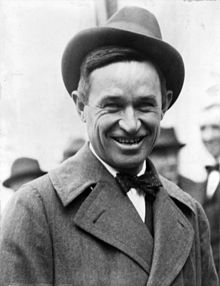
Now entering the latter half of my 40’s, the realization hit me: I’ve spent far too many hours mired in the past. To quote famous 20th century humorist, Will Rogers, “Just don’t let yesterday use up too much of today.

For three years, I failed to heed that sage advise. My New Years resolutions start mid-January, around my birthday. This year is going to be a re-start. What I mean is: all that I have obsessed over for the last 4 plus years will be minimized in favor for what is truly relevant in my life now, in the moment and proceeding forward.

Having said all that, the blog you are reading now has become my only Blogger blog going forward. Aircheck, Gospel Aircheck and the short-lived the Board blogs have been retired. Why I had so many similarly themed weblogs running concurrently in the first place is a mystery, anyway. There is no master plan for the Peanut Whistle: it continues to be an organic process. In the next few post I will attempt to share the sequence of events that unfolded in 2011 which brought about my decision; that’s a work in progress.

Stay tuned.


By the way, I’ve started a new Tumblr account. Check it out: jimoneal.tumblr.com

11 January 2012

Stop the Ringing!


So long, 2011. Let’s bring on the new year. The last few posts have been few and far between; so sue me.

I go through cycles of obsession and revulsion with my interests: my four blogs included. Since October, blogging in general has been cast aside for the noise of the holiday season that began with Halloween and ended around January 9th. Last year still ringing in my ears, I swear ‘12 will be a moving forward year concerned with the here and now building a better future for my family. The Peanut Whistle will attempt to reflect the change.

2011 overwhelmed me with looking back at my past; so I have, at least metaphorically, turned down the static. I will continue to post articles that inform young readers who have an interest broadcasting based on my old war stories (after all, that is the subject of this blog.)


Speaking of blogs, let us welcome into the Peanut Whistle archive all of last year’s posts from the Board and Gospel Aircheck, both of which I have discontinued. I’ve cut back the workload from 4 to 2 weblogs.

As promised, I will tell about my most recent radio related foray which unfolded last Autumn. With some of the events yet to play out, it seemed premature posting it. In fact, the experience soured me on the radio subject in general. (This may be the reason this blogger needed a sabbatical.)

Stay tuned

©2012 Neal Rhoden, The Peanut Whistle Weblogs. All Rights Reserved.

15 November 2011

Warts and All

Imagine knowing with absolute certainty that the good ‘ole days really were not all that good. One of the best tools I have had over the years is an audio tape diary I kept in my teens. The most consistent batch of these tapes sweep a two month period in the spring of 1984, just prior to my high school graduation in June of that year.

The kid on those tapes is alien to me: moody, overly-sensitive, and rigid. Not at all like I am in my “maturity”.

Most people do not have the luxury of actually replaying their youth in crystal clear stereo. The obvious topic of the diary is my fledgling radio career. Each daily entry features a scoped aircheck of the day. Looking back, I was an ungracious host for my listeners on my afternoon gospel music radio show. “I’m tired of playing this song,” I’d complain openly on-air, “It has one more chance.” When you made a request to my show you were almost punished for calling the station. I was learning to juggle a new career, the pressures of graduation, and teenage social drama.

I cringe at the thought of my formative years. By the next year, with school behind me, I had ironed out many of the rough edges having learned through self-critique. Man, it’s painful now listening to those old shows. To my credit, I was making it up as I went along. At this first station, the deejays had free reign minus any accountability. Honestly, I wouldn’t have lasted very long at a real radio station.

In 2011, the diary still serves a purpose: honest reflection, warts and all.

Stay tuned.

25 October 2011

The Bridge

Although it was (and still is) a great idea, Christian Country failed to make an impact on Religious radio when it first emerged in the late 80’s. The notion of mixing musical styles and creating a new art form is how many great genres got started. Rock-n-roll would have gone nowhere without a solid foundation of  Rhythm ‘n Blues and Hillbilly influences; throw in Gospel rhythms for good measure. Christian Country blended Southern Gospel and CCM producing a hybrid that sounded a lot like progressive Country music not dissimilar to modern artists like Rascal Flatts, Lady Antebellum, and others.

Traditionally Southern Gospel, The Dixie Melody Boys (at the time known for their hits, AntiochDSCN0612 Church Choir and Good ‘Ole Boys ) moved toward a more contemporary direction, introducing a decidedly more electric sound. The band had flipped from a very traditional quartet to Rock-meets-Country and now called themselves the DMB Band. Under that moniker, they produced at least two albums, Run Little Brother and Streetwise, both very good records (probably their best.)

Unfortunately, Christian Country was a flash in the pan, and DMBDSCN0614 Band reclaimed their former identity.

Today’s audio post is a commercial I voiced for a DMB Band concert held at a venue I provided: my home church. Turnout at the show was great, but my conservative pastor was soured by the experience. He had seen a roadie smoking a cigarette, outside on the church grounds and vowed that they’d never host a similar event again.

Additionally, the promoter had hired a no-name local SG group to sing on the bill along with DMB. The clash in style and quality of presentation was evident. It was Nashville polish meets wannabe garage band.  I enjoyed the show, but was embarrassed for DMB due to a perfect storm of poor planning. It was not the crossover bridge I had envisioned (lesson learned.)

DMB Band Tonight

Stay Tuned.

24 October 2011

What’s the Frequency?

Back in September 1986 my station put me, at age 20, in charge of conceptualizing how our new CCM format should sound. I did my best coming up with new imaging. In reality, using a young guy on such an important task was probably a setup. Should the new format fail, who else was to blame but the kid. I tried duplicating the sound of popular FM stations across the dial who had professional voice-over artists produce their jingle packages. Using top CCM hits of the day, I made a few  low budget station legal ID’s; adding my own personal touch. Presented today for the first time. Download here or press play below.


J900 Legal ID’s

Stay Tuned.

23 October 2011

Instant Lost Aircheck

Overlooked for years, today’s recording is a gospel aircheck from September, 1984. Being a deejay in a mild coastal climate has its perks, like hurricanes. This capture of WWJD 900 AM in Savannah, Georgia illustrates how Hurricane Diana threatened the Coastal Empire back then. Fortunately, the storm passed over the area without significant damage. It also demonstrates a first attempt at instant play requests: just another day at the office. Download here or press play below.

10 September 1984 WWJD 900 Khz (scoped) Panasonic RX-5030

Stay Tuned.

17 October 2011

Navigate G.A.

Here’s a note for all readers: the newly remodeled Gospel Rewind blog site is full of multi media content, especially audio. Make sure to link on over to the actual page for the full experience. That goes for those of you reading from Facebook, a reader, or even e-mail.  Currently I have the latest half dozen or so posts just under the header. If you scroll down to the bottom of the page you’ll find nearly all the Gospel Rewind shows we’ve done since 2009. In the sidebars we will be adding new stuff occasionally as well. Happy blogging.

Stay tuned.

16 October 2011

Rocktober’s Silver Anniversary

Today marks the 25th anniversary of the last official board mix aircheck I recorded at gospel radio home number one, “J900”. Listen below or download here.

16 October 1986 Unscoped J900 Aircheck Neal Rhoden

Stay tuned.

14 October 2011

Full Circle

Today I was looking back on my youth. (So what else is new.) In “Rock Even a Mom will Love”, a post from 2009 we talked about a pivotal concert going experience I had in 1985. A newspaper reporter observed those 26 years ago that although this was your typical smoke-and-mirrors rock show, comparable to Michael Jackson or Madonna; it was a show where he remarked, “area kids…[took] mom and dad to a rock concert.” At the same time parents exposed their children to “loud, modern music with a Christian message.”

In 2011 there is no major Contemporary Christian Music crossover acts comparable to 1985’s  Amy Grant or Stryper that I can take any of my 4 kids to see. Currents CCM artists just don’t do the big shows anymore. Despite the critics who called these acts sellouts, I think it was good for our kids and culture at large. Christian music needs exposure outside our churches and into the big venues again. Listen to the radio commercial for the 1985 CCM show; slick production values with secular crossover appeal.


14 Oct 1985 Amy Gran Concert

Stay tuned

05 October 2011

Tradio Radio

While reviewing old posts I stumbled on this gem from 2009 about a unique feature of many small radio stations across the rural USA—Swap Shop. I realized one glaring omission: I failed to mention the Swap Shop on my third radio home, WDCY.  By September, 1990 management decided we start one of these shows. Along with morning obituaries, the Birthday Club, and  birth announcements we were the ultimate small market cliché.


If you have 15 minutes to spare, gospel radio home number four is shown on this YouTube video I made a couple of years ago. There is a brief segment shot during Swap Shop.

The Grand Tour, WBKI in 1993

Stay Tuned.

Technorati Tags:

28 September 2011

Dead Links

No I’m not talking about breakfast; although some Hillshire Farm ‘Lil Smokies® or Polska Kielbasa sausage sound good about now. The kind of links I mean are the audio samples oft times featured in Gospel Aircheck. Basically there is a file sharing service that I use to store my audio and it provides an Internet link so you can either download or play directly from the blog.

It irks me when one doesn’t work—the dreaded dead link. I depend on a file to be 1oo% playable all of the time. Last post I presented an old commercial that no longer plays. What’s funny is that the adjacent file is just fine. What a mystery.

This is a round about way of saying that it would be nice to receive feedback when this happens. It keeps me on my toes. I have already discovered a few more bad links myself and am in the process of firing the culprit. Links will be repaired when and if possible. For now, I’m hungry. Pass the syrup.

Stay tuned.

26 September 2011

Re-imagined

DSCN0758Like anyone with a somewhat artistic temperament, once I create something I am never finished with it. Recently, we warmed up the old Gospel Aircheck studios to revisit an ancient piece of copy I wrote in 1984 for the inaugural Christian Youth Skate we discussed last time. The script became a 30 second spot that I also provided the voice-over for. The Music bed was an overlap mix of two songs our management restricted from airplay because they were judged too hot. It’s hilarious that Water Grave by the Imperials and Home of the Lord by Sandi Patti (duet with Russ Taff) were taboo because they sounded a lot like rock music on a mostly Southern Gospel station that in reality played everything from the Happy Goodmans to Amy Grant. Gospel 90 had an inconsistent standard when it came to music selection, to say the least. Label the format more “psycho variety” than anything else.

DSCN0702Anyway, the point is that I used my music bed selection as a deliberate stab against this hypocritical system. Somehow, if a song had a strong drum beat or an electric guitar solo, it was a no-no.  The Youth Skate gave me license to rock (yeah, right.)

Back to the present: not necessarily in this order, I remixed the original music bed, taking bass licks and drum beats, digitally enhancing and looping them. Next, I added stereo effects (laser blast stingers) and manipulated the sound by re-panning some of the original elements until the music sounded unlike it ever did before. I didn’t use my 1984 reading of the copy. We used a Sennheiser MD-421 mkII (mid-90’s vintage); the same type microphone I had at the station for the new vocal track. In 27 years my voice has changed quite a bit, so it can be considered a completely reimagined version done just for the heck of it. The 1984 original can be downloaded here and the newly redone skate commercial here. Or just click below. See what you think.

1984 Original Christian Youth Skate, press play

2011 Reimagined Christian Youth skate, press play


Stay Tuned

24 September 2011

Ready to Roll

My first Christian skate parties have been crazy fun writing about, but what leads up to the actual parties is also what makes my teen years so captivating in my, ahem, 40’s.


DSCN0792I forget exactly how I, with only a year deejay experience, am chosen to host the Christian Youth Skate in that summer of ‘84, but my personal theory is that at 18 years of age I am considered a natural for the job. My intestinal butterflies notwithstanding, the show goes on without a hitch. DSCN0766

Todays post is about my “controversial”  music selections, all of them still in my archive these 27 years later. My station manager gives me an enormous stack of CCM albums our predominately Southern Gospel format excludes—a windfall for me. My favorite discovery: Sweet Comfort Band, Perfect Timing (I occasionally listen to that record now.) These record company freebies, courtesy of Gospel 90, also include the phenomenal Age to Age by Amy Grant (especially the crowd pleaser song, Fat Baby).DSCN0655 This set of promotional Lp’s also adds Petra's wonderfully bizarre Not of this World, one of my early ‘80’s favs.

Some of the crowd (represented by buzz-kill adult chaperones) are not pleased by the heavily rock and pop-influenced Contemporary Christian I play. But, who can dance or skate to elevator music? In response, I crank-up the speakers to drown out the fuddy-duddies. If its too loud, you’re too old, pal. Not that I am a rebel; to the contrary, I have a hard time shedding my shaped-note, four part harmony heritage as well: mixed emotions. But I maintain an open mind. It sounds closer to the current top-40 I, as a teen, secretly listen to. Looking back,  in those days most local church youth groups have yet to emerge from stodgy traditionalism.  To them CCM is merely a substitute for “evil” secular music. The beat, in and of itself, is seen, by association, as of the Devil. (A famous television evangelist makes that assertion in a CCM magazine interview  and, ironically, falls from grace amidst a very public sexual scandal in 1988. Many church leaders of the era consider his views Gospel.)

Not to cast stones, I never have understood why many Southern Christians reject, and downright fight this Wonder Bread wholesome style of music performed by Honest to Goodness Believers and I probably never will. Another theory: this televangelist  sees CCM as a threat to his livelihood, at the time peddling his own brand of gospel records. Everyone has a hidden agenda.

“For the love of money is the root of all evil”—1 Timothy 6:10 KJV. Translation: greed is evil, not matter what  Wall Street says.

The skate parties have sparked a life-long love of the genre. The Youth Skate only lasts a summer, but the musical treasures remain—priceless.


See the original post that inspired this story at our sister blog: Aircheck.

Stay tuned.

23 September 2011

What Now?

Unfortunately, nothing good (luckily also, nothing bad) lasts forever.  The Peanut Whistle will go on but I am afraid radio broadcasting as I have known it is on its last legs. I have been blessed to spend a relatively short time in the industry. Roughly from May, 1983 until August of 1995—12 years. Even in 1983 radio, particularly AM, begins a terminal decline. However, it isn’t until 1996, following the consolidation of radio when I see the final nail in the coffin. Large conglomerates are now allowed to gobble up little stations in all markets into a cookie cutter clusters centrally programmed via satellite, voice tracking, the list goes on.

Stations like my first are victim of “consolidation.” The memories only remain.

The radio dial pre-1996 is a wonderfully diverse place. Yes, there are some really bad ones thrown in with the good; at least, to me, the diversity makes this ancient business much more appealing then than now.

The point is moot. Internet services like Pandora (which I use more than real radio for music, anyway) are actually getting better ratings in our top ten markets than over-the-air broadcasting. The future is on the Web, obviously.


The Next few ‘Whistle posts will chronicle my 2011 journey back to the present day: my futile struggle getting back into radio. Maybe you can’t go home again.

Stay tuned.

20 September 2011

Joyful Noise

Recently I attended a music convention held for the last decade or so in Louisville, Kentucky. Previously, it took place in Music city USA—Nashville, Tennessee (from 1971-1993).  It began in various towns all throughout the southern United states including Memphis, Birmingham and my home town Atlanta, Georgia.

The National Quartet Convention is a week long event aimed at Southern Gospel music fans. It celebrated its 50th anniversary in 2007 and shows no sign of slowing down. Music overload, jam-packed with everything SG. I’m wore out, but loved every minute.

One more item off the old bucket list. In 2012, the Gospel Music Association Dove Awards® return to Atlanta, this blogger intends to be there as well.

Keep it in the red.

All Together Now

What first sold me on the 2011 National Quartet Convention, although I’m not a huge SG fan per se, was the fact that the Gaither Vocal Band were hosting an Afternoon Showcase performance. Not only were the current lineup singing, but it was a reunion of all the past members (except for Guy Pinrod, conspicuously absent.)

Angie and I made it just in time for the show having traveled six hours from Atlanta. Thank God for GPS. Cracker Barrel, and rest stops. Boy was it worth it! The impromptu nature of the set was thrilling to hear; as though Bill Gaither was arranging as they went along. For us this Thursday Session was the highlight of the whole convention. Gaither Vocal band has always successfully blended southern and more progressive sounds. I have followed GVB since their early ‘80’s inception and continue to be a fan although they were a little more Contemporary Christian in the beginning. This is a group not easily pigeonholed. In the early 90’s Gaither shifted his emphasis in a more southerly direction. But, that is alright.DSCN0643

Most fans are familiar with the Reunion video series. Gaither has done an excellent job preserving the best of our southern heritage. On Friday, the NQC presented the entire Reunion cast in a heavenly choir. Despite the cramped seating in Freedom Hall at the Kentucky Expo Center the whole experience, at least musically, was a lifetime dream fulfilled. More on the other performances in future posts.

Stay tuned.

19 September 2011

Four Part Harmony

for long time readers of Gospel Aircheck, welcome back! I felt this was the perfect time to return to one of my favorite topics, southern gospel.

As a youth I was knocked out by Contemporary Christian Music at a time when most of my peers had never heard of Petra, Amy Grant or the Imperials.

Up until then I had cut my teeth on the likes of the Oak Ridge Boys, The Happy Goodman Family, and especially Andrae Crouch. In those days it was all gospel music to me. The various styles had yet to splinter into the sub-genres we know today. These days it seems that the Dove Awards are the only place the divergent forms mix—never mingling on the radio anymore.

The older I get, the more the music of my formative years draws me back. Don’t get me wrong I still love to rock but the soothing nature of voices in harmony against a simple musical accompaniment comforts these aging bones.

Recently my wife Angie and I spent our second honeymoon at the 2011 National Quartet Convention in Louisville, Kentucky. We had a great time. Both of us share a love and passion for gospel music. Like Donnie and Marie Osmond she’s a little bit Country and I’m a little bit Rock-n-Roll (rest easy, the two of us aren’t related.) The point is one balances the other. The NQC has been something I wanted to do since I first heard of it nearly 30 years ago. The next couple of posts will detail our adventure.

Stay tuned.

28 August 2011

Positively Rockin'

Not that anything I know about broadcasting is applicable in today's Internet/computer driven business model, it does ignite some spark for my new show Positive Rock on the World Wide Web.


Will it detonate or be a dud?


The Board will share the process as it unfolds. After all, this is only my part-time gig.


Keep it in the red.

27 August 2011

Burying the Needle

Vinyl's resurgence lately has me scouring local thrift stores for records that I got rid of many years ago when I decided to switch over to CD's. Good news: I have found many that I discarded (or sold) in haste yea those eons ago; now in 2011, all of them were less than a dollar! And a few were still unopened in their original shrink wrap. I don't know who would keep a record unopened for 30 years, but...thank you.


Humans run on analog sound. Currently there has been a backlash from audiophiles fatigued by the clinical precision of digital. Me? I see value in both methods of sound recording. Analog for its forgiving nature (often adding flattering colors to original sound) and digital for its ease of editing without generational loss.


Not intending to revise history, 25 years ago I really saw the compact disc as a step forward. Nostalgia is part of the needle-in-groove mystique; right now I am all wrapped up in the good old days.


Keep it in the red.

Labels

1980's (1) 1983 (1) 1984 (2) 1990 (2) 1991 (2) 1992 (1) 2010 (3) 2011 National Quartet Convention (3) 75 (1) 8 track (1) ABC (2) american (2) analog sound (2) audio (7) awesome Gospel airchecks (4) Bill Gaither (1) birthday (1) blogging (12) Bluetooth (1) bologna (1) book diary (1) Brad Paisley (1) Breakfast with Burl (2) Burl Womack (2) Career achievement award (2) career choices (3) catholic (1) CCM (7) Chris Watkins (1) Christian Country (1) christian scandals (1) church (2) church culture (2) Classic Imperials (1) consolodation (1) country (2) Country music (3) crossover (1) Dennis the Menace (1) depression cure (2) digital (2) Digital vs. Analog (1) Dixie Melody Boys (1) DJ (5) Dogs (1) economy (2) electronics (5) Elvis (2) exercise (1) Facebook (2) family history (1) family life (19) FCC (1) football (3) Ford (1) Foreigner (1) Fun (1) Gaither Vocal Band (1) Garden City Georgia (1) general store (1) Georgia Radio Hall of Fame (1) Gospel music (8) Gospel Rewind Radio (2) gramophone records (1) Gran Torino (1) Halloween (1) health (1) history (1) Humor (4) Imperials favorite group (1) impractical ideas (1) insomna (1) Internet (3) Internet radio (1) Irish (1) J900 (1) kids (2) Let's Make a Deal (1) Lulow Porch (1) marketing (2) modification (2) network news (1) New media (2) New Year (1) Novelties (1) Paul Harvey (2) peanut whistle (8) podbean (1) podcast (1) podcasting (1) pop history (5) programming (3) psychology (1) radio (13) radio history (29) radio production notes (3) random (2) restoration (4) retail (1) Rock music crossover (1) rural (1) Saint Patrick's Day (1) Satire (1) Savannah (4) Savannah Skate Inn (5) Skate culture (3) small market radio (2) small town (2) small town radio (6) society (3) southern culture (11) southern gospel (7) talent (3) technology (16) Telecommunications Act of 1996 (3) telephone (1) television (2) The Beatles (1) Tiger Woods (1) tour (2) TV (2) video (1) vinyl (2) WBKI (2) WDCY-AM (2) WEAS (7) weather (1) Wendy Bagwell (1) whimsy (1) Winans (1) WKRP in Cincinnati (2) WNMT (1) woodworking (4) work (2) WSB-AM (1) WSPZ aircheck (1) WWJD (4) WZAT (2) YouTube (3) Z-102 (2)